A dry year underground: what the 2026 drought does to a private borehole
The hosepipe ban is the visible part. Under Lincolnshire the water table has been falling since spring, and a borehole that tested fine two years ago may not be giving the same water now. What changes, what to look for, and when to retest.
· 5 min read
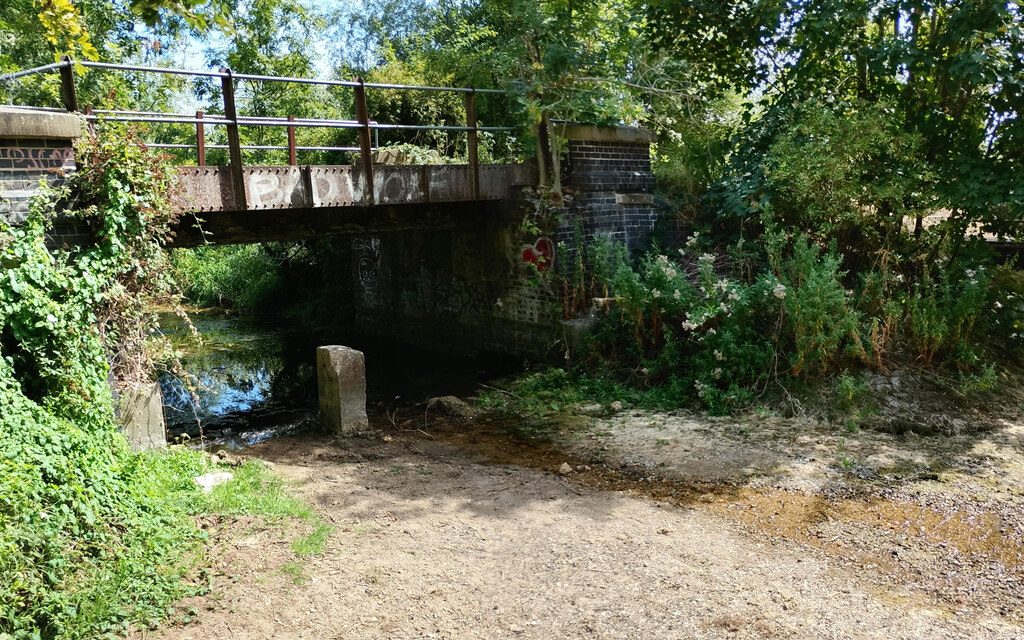
The source of the River Slea near Sleaford, August 2026: dry bed above, the first water only just rising. Photo: Ian Paterson, Geograph, CC BY-SA 2.0.
The driest year most borehole owners can remember
Anglian Water's hosepipe ban has covered most of Lincolnshire since 10 July. The Environment Agency moved East Anglia into official drought at the end of July, and by August most of England was in the same position, with more than a thousand abstraction licences restricted because rivers were too low to take from. The rain that arrived in late August did not undo a spring and summer of record-low rainfall, and the agency's own figures put reservoirs below their seasonal average going into the autumn.
A hosepipe ban does not apply to a private supply. If you draw less than 20 cubic metres a day you need no licence and nobody will tell you to stop. That is the attraction of a borehole, and it is also the catch: nobody is watching your water except you.
Where the water goes in a drought
A borehole does not sit in an underground lake. It sits in rock or sand that holds water in its pores and cracks, and the level of that water, the water table, rises in winter when rain soaks through and falls in summer when it does not. In a normal year the two roughly balance. In a year like this one the winter top-up was short and the summer draw was long, so the water table across much of the county is lower than it has been for years.
Three things follow from a lower water table, and all three change what comes out of the tap.
1. You are pumping older, deeper water
Water near the top of an aquifer is young, has met air recently and carries oxygen. Water lower down has been there longer, has used its oxygen up, and has had time to dissolve whatever the rock offers. When the level drops, your pump draws from lower in the column, and the water changes character even though the borehole has not moved.
On the sands and gravels of the fens and the coast, that usually means more iron and manganese: water that was clear from the tap now stains the basin, or stains it worse. In clay and oxygen-free ground it can mean the first appearance of the rotten-egg smell of hydrogen sulphide. On the chalk of the Wolds it tends to mean harder water, so softeners and scale control work harder and a kettle furs faster.
2. Near the coast, the salt moves in
From Mablethorpe round to the Wash, and up the tidal rivers, fresh groundwater floats on denser salt water. The boundary between them is held in place by the pressure of the fresh water above. Lower the fresh water and the boundary rises. A borehole that has always drawn fresh can start to draw brackish, and it shows first as a faint salty taste, then as corroded fittings and dying plants, and on a test as raised sodium, chloride and conductivity. Once salt is in a borehole it does not simply leave when the rain comes back; the boundary can take a long time to settle.
3. Pumps run longer and pull harder
A pump that used to fill the tank in twenty minutes now runs for forty, drawing water faster than the ground can refill the hole. That drags fine sediment into the supply, which shows as cloudy water and blocked filters, and it can pull the water level down to the pump itself. A pump that sucks air is the clearest sign a borehole is being asked for more than it has.
When the rain comes back
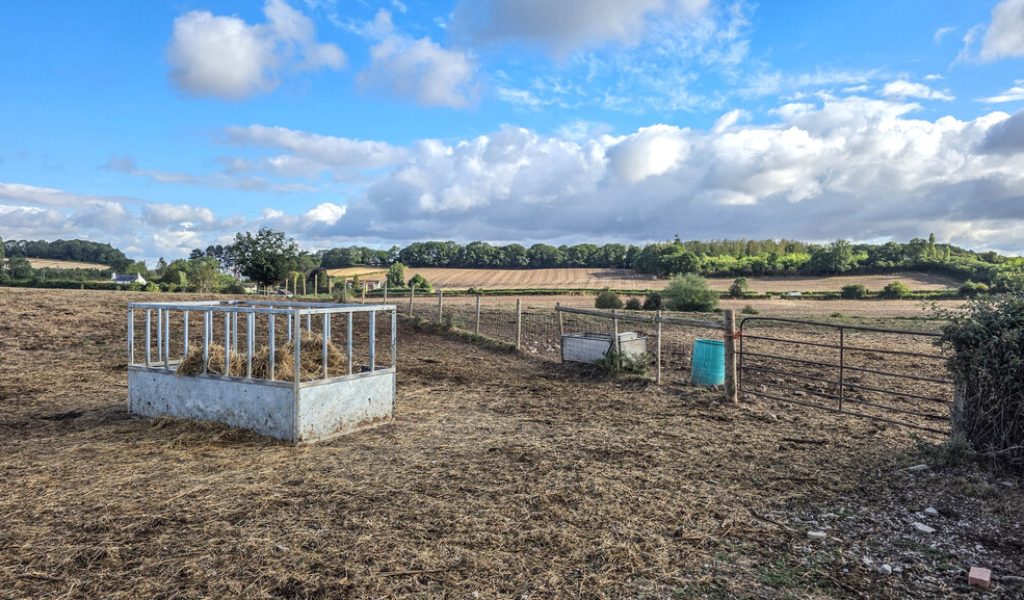
Oddly, the riskiest moment for a private supply is often not the drought but the end of it. Ground that has dried and cracked for months lets the first heavy rain run straight down into shallow wells and springs, carrying with it whatever was on the surface. On farmed land that is nitrate from fertiliser and slurry that has sat unwashed all summer, and on grazed land it is bacteria. A well that passed its microbiological test in June can fail in October for no reason the owner can see.
Stored water matters too. A tank that has been warm all summer and turned over slowly is a good place for bacteria to grow, and in a commercial building that is where Legionella becomes a question.
What this means for a business on a borehole
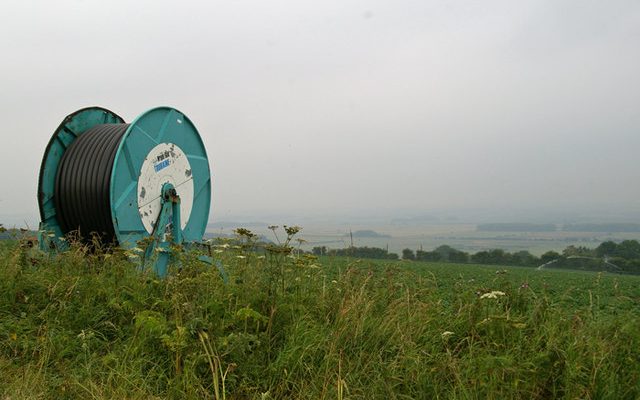
For a farm, a holiday park or a food business the drought has a second edge. Abstraction licences above 20 cubic metres a day have been restricted across the region this year, and businesses that were encouraged onto boreholes to free up mains capacity are now being asked to show that their supply is resilient as well as safe. A results history is the evidence. If your records show the same determinands at the same time each year, you can see a trend forming before it becomes a problem, and you can show a regulator or an auditor that you are watching.
Water recovery, which we wrote about in our Lincolnshire post, looks very different after a summer like this. A vegetable washer that recovers and reuses water draws less from a falling aquifer and has less to discharge under its trade effluent consent.
What to do now
- Retest, even if you tested last year. The water has changed under you. Our standard drinking water test covers the parameters that move in a drought: iron, manganese, hardness, sodium, chloride, nitrate and conductivity, alongside the bacteriology.
- Test again after the first wet month. The post-drought flush is when shallow supplies fail on bacteria and nitrate. A microbiological test is quick and cheap, and it is the one we would not skip.
- Watch the pump. Longer run times, air in the line, cloudy water after a run: these are the signs your borehole is being overdrawn, and they are worth noting with the date.
- Keep the results. Every test you have done sits in your account on this site against the sampling point, so the next one has something to be compared with.
If you are on a borehole anywhere in Lincolnshire and are not sure where to start, start from your situation and we will point you to the right test, or ring us in Louth and talk to someone who has spent the summer looking at exactly this.