Water in Lincolnshire: forty years of boreholes, iron and bad eggs
Pozzani Pure Water has worked from Louth since 1987. Why Lincolnshire runs on boreholes, what comes out of the ground here, and why more of the county is testing its own water.
· 6 min read
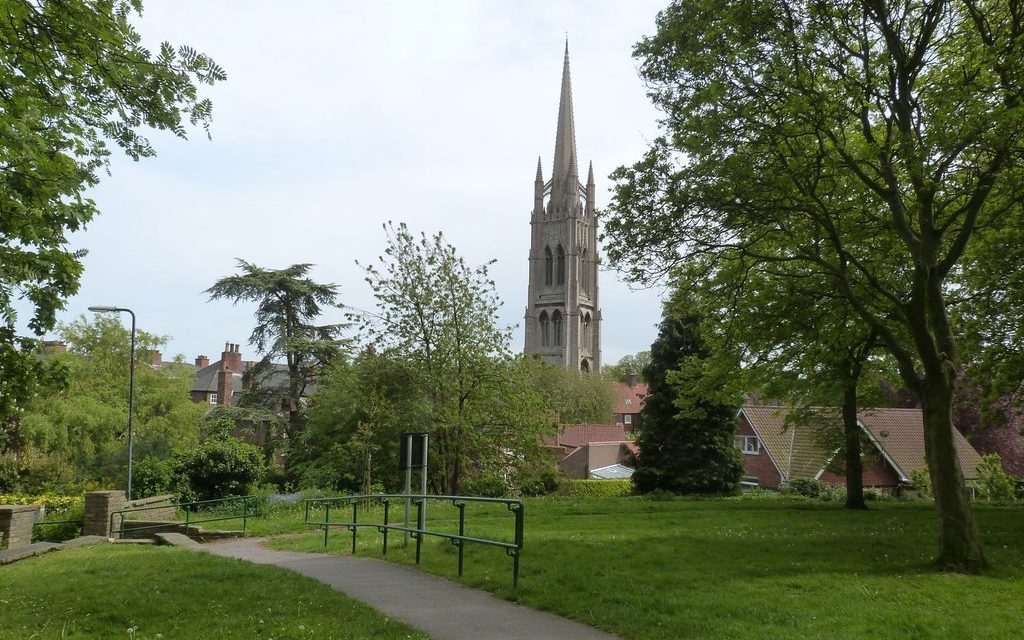
Louth, with the spire of St James'. Photo: Derek Voller, Geograph, CC BY-SA 2.0.
From an under-sink filter to a shopping centre
We started in Louth in 1987 with domestic water treatment: under-counter filters and softeners for households on mains water who wanted it to taste better, scale less, or both. We still fit them. But over the years the work grew with the customers, through the dairies, breweries and vegetable packers of the East Midlands to some of the country's best-known food and drink brands, and to large commercial projects such as the rainwater harvesting scheme at Meadowhall in Sheffield, where rain collected from the roof, later supplemented by a borehole, supplies around half the centre's water.
The thread through all of it is the same: find out what is in the water first, then treat only what needs treating. That is why we test before we sell anything.
Why Lincolnshire runs on boreholes
Lincolnshire is big, flat, thinly populated and farmed to its edges. Mains water does not reach everywhere, and where it does it is metered and getting dearer. So a great deal of the county's water comes out of the ground through private boreholes and wells, and the number is rising for three reasons.
Cost. A farm washing root vegetables, a holiday park with two hundred pitches, or a food factory running clean-in-place cycles can use thousands of cubic metres a year. Against mains rates, a borehole pays for itself quickly, and we are asked to design the treatment for new ones every month.
Being asked to move. Increasingly, the water company itself asks a business that has always been on the mains to come off it. New housing needs the mains capacity, and a large commercial user on a borehole frees it up. The business then needs a supply that is safe for staff, fit for the process, and documented, often for the first time.
Water recovery and effluent. Businesses that have discharged process water to a watercourse or sewer for decades are now being required to test what leaves the site against a trade effluent consent, and to show the results. At the same time, heavy users such as vegetable washing are being actively encouraged to recover and reuse water rather than draw continuously from the water table. Both mean more testing, and both are now part of what we do, from the effluent test to the treatment plant that brings a discharge inside its consent.
What comes out of Lincolnshire ground
A borehole is only as good as the rock it sits in, and Lincolnshire has several kinds. The chalk of the Wolds gives hard, clear water. The sands and gravels of the fens and the coast give softer water that often carries iron. The clays in between can give water that has sat still for a long time and smells of it. These are the problems we see most, and what each one does.
Iron and manganese
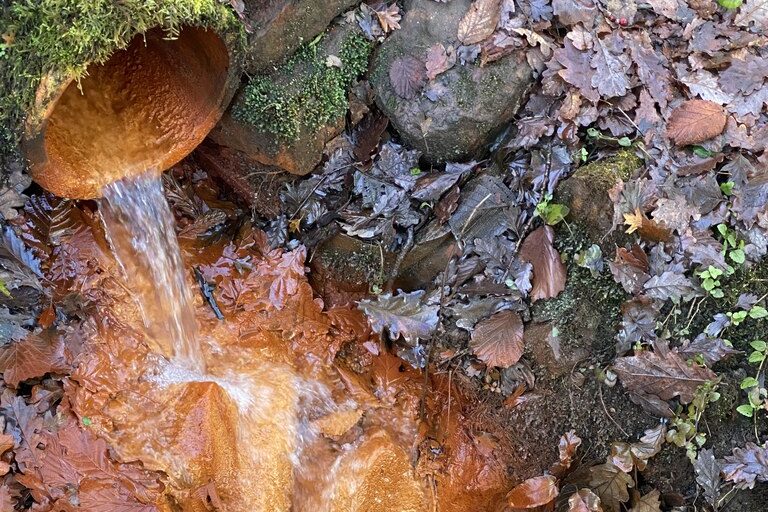
The most common finding in the county by a distance. Both are dissolved out of the ground, invisible in the glass, and both oxidise on contact with air: iron to an orange-brown stain, manganese to a black one. The signs are rust-coloured water from a tap that has stood, stained toilets, sinks and laundry, a metallic taste, and, in a business, blocked irrigation nozzles, fouled heat exchangers and marks on washed produce. Neither is a health concern at the levels usually found, but the drinking-water guideline is low (200 µg/l for iron, 50 µg/l for manganese) because the nuisance begins well below any harm. The fix is oxidation followed by filtration, sized to the borehole's flow, and it is the single most common system we install. Read more on iron and manganese in the water library.
Hydrogen sulphide: the bad-egg smell
Water that smells of rotten eggs when the tap runs, worse from the hot tap and first thing in the morning, carries dissolved hydrogen sulphide. It comes from bacteria living in oxygen-free water deep in the borehole, or sometimes from a reaction with the magnesium rod inside a hot-water cylinder. It corrodes copper and brass, blackens silver, and makes tea undrinkable. It is a gas, so it is easy to miss in a laboratory sample taken hours earlier, which is why we ask about smell before we ask anything else. Treatment is aeration or oxidation at the borehole head, and a cylinder rod change if that is the cause.
Brackish water near the coast
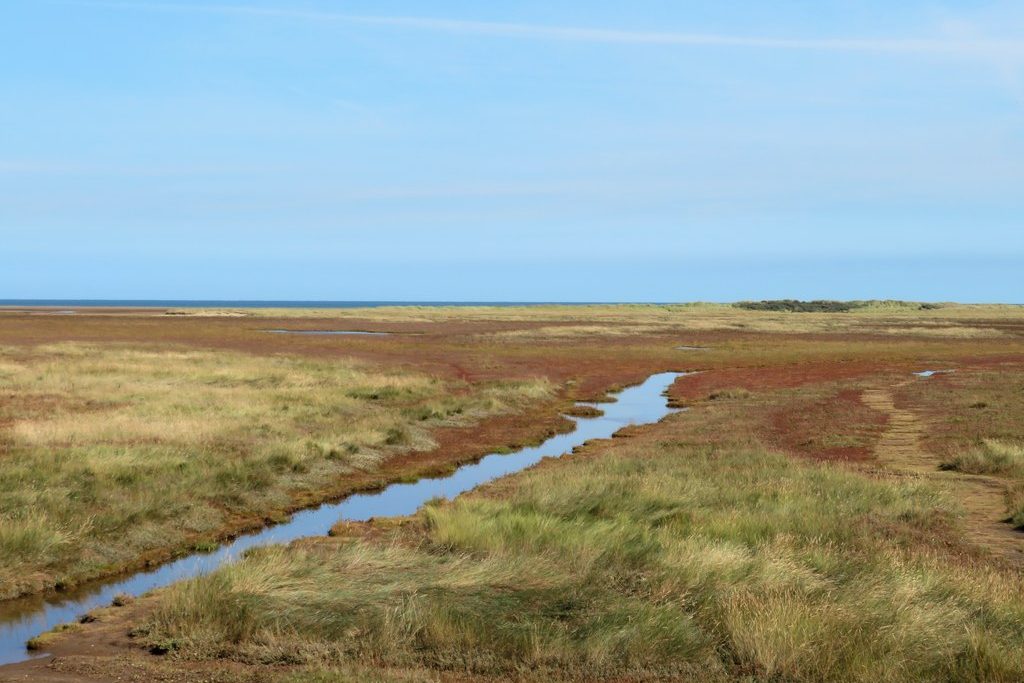
From Mablethorpe round to the Wash, and inland along the tidal rivers, boreholes can pull in salt. The water tastes faintly of the sea, corrodes fittings, kills plants that are watered with it, and shows up on a test as raised sodium, chloride and conductivity. It cannot be filtered out in the ordinary sense: salt in solution needs reverse osmosis, and the decision is usually whether to treat the whole supply or just the drinking water. Sometimes the answer is a deeper or more inland borehole.
Hardness and nitrate
Chalk water from the Wolds is among the hardest in England, so softeners and scale control are routine. And on farmed land, nitrate from fertiliser and slurry reaches shallow wells and springs, which matters for anyone bottle-feeding a baby on the supply.
Remote homes, where the borehole is the only option
Across the Wolds, the marsh and the fens there are houses, smallholdings and converted farm buildings that will never see a mains pipe. For them a borehole is not a saving, it is the water supply. We look after a great many of them, and the pattern is the same as for businesses, only smaller: test first, treat for what is actually there, and test again on a sensible schedule so a change in the ground, or a wet winter, does not go unnoticed.
Where testing fits
Everything above starts with a laboratory result. Our standard drinking water test covers the parameters the Private Water Supplies Regulations ask for, the microbiological test is the quick check after work on a supply or a change in taste, and the effluent test covers what a water company's consent names. Because the engineers who read the results are the same people who have been fixing Lincolnshire water since 1987, a failed parameter comes back with a plan, not just a number.
If you are in Lincolnshire and on a borehole, or about to be, start from your situation and we will point you to the right test.